ANOUNCEMENTS
World Down Syndrome Day: Supporting Communication and Inclusive Learning
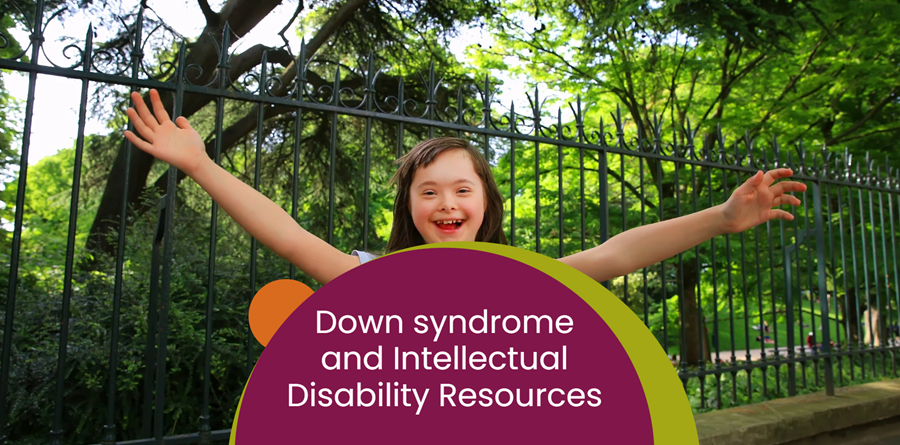
World Down Syndrome Day is observed each year on 21 March and has been formally recognised by the United Nations since 2012. The date reflects the genetic basis of Down syndrome, which occurs when an individual has an extra copy of chromosome 21 — symbolically represented as the third month and the 21st day. Schools and communities frequently mark the day through awareness activities such as “Lots of Socks,” where colourful or mismatched socks symbolise diversity and the uniqueness of every individual. These initiatives create opportunities for conversation, understanding, and visible support for inclusive communities.
World Down Syndrome Day also provides an opportunity to reflect on how our understanding of Down syndrome — and the systems that support inclusion — continue to evolve.
Communication is central to this conversation. Research consistently describes differences in speech and language development among individuals with Down syndrome, including expressive and receptive language, speech intelligibility, and overall speech development. These communication profiles can influence access to learning, peer relationships, and participation in language-rich environments.
Language Disorder is common among children and young people with Down syndrome, reflecting the well-established language profile associated with the condition. While individual strengths and needs vary, many learners benefit from support with expressive language complexity, vocabulary development, and navigating the increasing linguistic demands of the curriculum. At the same time, strengths in social engagement and visual learning are often evident and can be intentionally supported across educational and community settings.
Approaches to supporting children and young people with Down syndrome have evolved over time toward strengths-based and inclusive practices. By strengthening communication supports and creating accessible learning environments, educators, clinicians, families, and communities can help ensure children and young people with Down syndrome are supported to understand, connect, and participate meaningfully.
Societies evolve over time as knowledge, values, and expectations change. Just as many past practices are now recognised as unsafe, unjust, or even unethical, the language used to describe disability has also evolved as understanding of dignity, inclusion, and respect has grown. This year’s international campaign from CoorDown, Just Evolve, highlights the importance of continuing this progress — encouraging communities, systems, and attitudes to keep evolving so that people with Down syndrome can access the opportunities, supports, and autonomy they deserve.
For further information and resources about Down syndrome, visit Down Syndrome and Intellectual Disability Queensland (DSIDQ) Down Syndrome and Intellectual Disability Queensland | Advocacy and Awareness — Down Syndrome Queensland Education
Understanding Speech Sound Development: What the Latest Research Tells Us

Children commonly make speech sound errors as they learn to talk, particularly during the preschool years. These variations are a typical part of development, and most children gradually acquire accurate speech sounds over time.
However, the research also highlights specific “red flags” — speech error patterns that are uncommon, persistent, or atypical. These patterns may indicate an underlying speech sound disorder or broader communication difficulty and can help guide more informed referral decisions.
A key contribution of the study is the provision of updated population data on speech sound acquisition. Much of the evidence guiding developmental expectations has been decades old, so contemporary benchmarks provide valuable insight for clinicians, educators, and families.
Why this matters
While developmental variation is expected, persistent or unusual speech difficulties should not be dismissed. Early identification and assessment can:
• support communication and participation
• reduce risk for later literacy difficulties
• provide reassurance for families
• ensure children who need intervention receive support as early as possible
Assessment by a speech pathologist is low risk and does not automatically mean therapy is required. Instead, it provides clarity about a child’s development and whether monitoring, advice, or intervention is appropriate.
A balanced message about development
The research reinforces an important balance: variation in early speech development is normal, yet persistent or atypical communication difficulties warrant further consideration.
Recognising this balance helps avoid both unnecessary concern and missed opportunities for early support.
What this means for families and professionals
Parents, educators, and health professionals should feel confident seeking assessment when concerns arise. Trusting early concerns helps ensure children with speech or language disorder are identified and supported in a timely way — while also reassuring families when development is progressing typically.
Language Disorder Australia welcomes research that strengthens understanding of children’s communication development and supports clearer pathways to assessment and care.
You can read the open-access research here:
To learn more about speech, language and communication needs, please refer to the Language Disorder Academy on-demand learning module:
Speech, Language and Communication Needs
International Mother Language Day: Continuing the conversation
Although International Mother Language Day was observed on 21 February, its message remains highly relevant across educational and clinical contexts. The observance highlights the importance of linguistic diversity and multilingualism, recognising language as a central vehicle for identity, culture, and learning.
Globally, thousands of languages are spoken, yet many are at risk of disappearing, and a substantial number of learners continue to access education in languages they may not fully understand. This reality reinforces the importance of inclusive educational practices that recognise linguistic diversity while supporting students who experience language-related barriers to learning.
For children and young people with Language Disorder, these themes are particularly significant. Access to learning is shaped not only by the language of instruction but also by the complexity of linguistic demands embedded across the curriculum. International Mother Language Day provides an ongoing opportunity to reflect on how educators, clinicians, and families can work collaboratively to strengthen communication access and support meaningful participation in learning.
Rare Disease Day: Recognising communication in rare conditions
Rare Disease Day is observed each year on the final day of February, falling on 28 February 2026, and raises awareness for the millions of people worldwide living with conditions that are individually uncommon yet collectively widespread. A disease is typically considered rare when it affects only a small proportion of the population, often fewer than 1 in 2,000 people. Despite their rarity individually, rare diseases affect an estimated 300 million people globally, highlighting a significant and often under-recognised public health and educational issue.
Many rare diseases are genetic in origin and frequently present with complex, lifelong, and sometimes progressive health and developmental needs. These conditions can be difficult to diagnose, and individuals and families may experience prolonged diagnostic journeys and limited access to specialised supports.
For children and young people, rare conditions often intersect with communication, learning, and participation needs. Rare Disease Day provides an opportunity to reflect on the importance of interdisciplinary collaboration, early identification, and inclusive educational environments that support communication access and participation across settings. Recognising the diversity of experiences within rare disease communities strengthens advocacy efforts and reinforces the importance of responsive, evidence-informed practice.
March Webinar
More Than Numbers: The Role of Language in Mathematics
Join Inclusion Specialist Educator Nicole Lindgren and Senior Speech Pathologist Athena Panagopoulos for an evidence-based webinar exploring the critical role language plays in mathematics learning. This webinar is designed for educators, allied health professionals, and anyone supporting school-aged learners.
Mathematics is more than numbers. It is a language students must learn to read, interpret, and represent. Long before formal schooling, children begin developing early numeracy concepts that help them make sense of both the language and the symbolic systems of mathematics. This webinar explores the language demands of mathematics and how language difficulties can create hidden barriers to learning. Participants will gain practical strategies to support students with Language Disorder, helping them access mathematical concepts and build confidence in the maths classroom.
Learning Objectives
By the end of this webinar, participants will be able to:
1. Explain the role of language in the development of both mathematical fluency and understanding.
2. Describe mathematics as a language system (verbal, symbolic, and visual).
3. Identify the key language demands of mathematics and how language difficulties may affect students’ performance on these tasks.
4. Select practical strategies and supports for students with Language Disorder to improve access to the maths curriculum.
📅 Tuesday 31 March 2026
🕒 3:30pm (AEST) (Brisbane Time)
Registration for this webinar is free, and all registrants will receive complimentary access to the recording via the Language Disorder Academy once post-event editing and preparation are complete. Participants attending live will also have the opportunity to engage with presenters and ask questions.